Bruce[2].jpg (4158 bytes)

Bruce Roberts-Goodson

CONTACT BRUCE BY
 EMAIL
Bruce Roberts Yacht Design
Official BRUCE ROBERTS WEB SITE - DESIGN OFFICE FOUNDED 1966

METAL BOATS BOOK 2nd Edition 
DETAILS  ORDER
us$39.95- € 26 - £15

choosing.JPG (26072 bytes)
CHOOSING
CRUISING SAILBOATS
DETAILS  
 ORDER
us$39.95  


Gwenda Roberts-Goodson

HOME PAGE
 

SUPER STUDY PLANS -  up to THREE STUDY PLANS ON CD.  

These new study plans have lists of materials & equipment required to build and equip your boat ... these lists will help you to cost out the complete building project.
Each CD contains - ALL the drawings of your choices of ONE or TWO or THREE plans with up to 25 sheets per plan! Technical information and Performance graphs are included for many designs. PLEASE indicate the study plans you would like in the SPECIAL INSTRUCTIONS BOX you will find on the order form.

FREE 300 page e-BOOK ... A boatbuilding e-book will be included FREE with your study plans on CD

CONSTRUCTION & COMPLETED BOAT PHOTOS ARE INCLUDED IN THE STUDY PLANS ON CD
INCLUDES LATEST PLAN & KIT PRICES  ... ORDER study plans now only $99 or 79  or  £55
 

NEW YORK 55 - Fiberglass, steel, aluminum

The first plans to be drawn for this design were for the fiberglass version, currently being built for a French customer. We have already drawn up other versions of this sailboat in radius chine steel and aluminum.

We have refined this hull design using the latest versions of yacht design software. This is a very fast boat and one that will make extended passages with maximum speed and comfort. It is a large boat with a relatively low displacement length ratio of 220. This boat will be VERY fast and the cruising sail area of 1420 SQ FT ( s/a Displ ratio 14 ) may be increased if you prefer a larger rig.

L.O.D. 16.97 m 55'    8"
L.W.L.  20.50 m 50'  10"
BEAM 5.05 m 16'    7"
DISPLACEMENT 29,484 kg 65,000 lb
SAIL AREA 132 sq m 1,420 sq ft
AUX. POWER   80 TO 120 hp

ny55a-01[1].gif (22798 bytes)

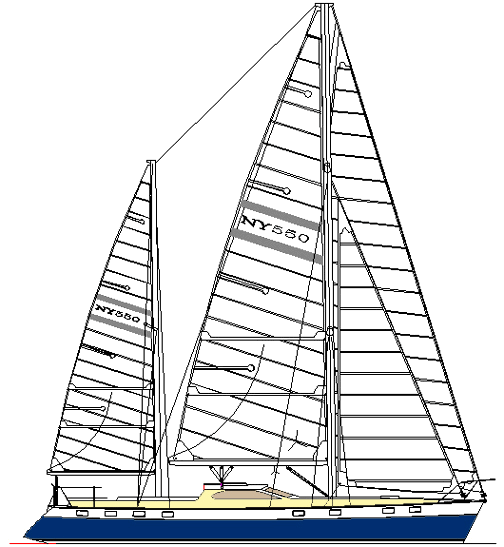
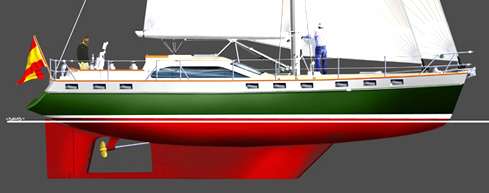
New York 55 - Version A

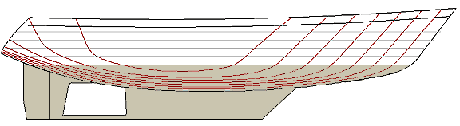
The version A will features a lower profile and will suit those that like their boats to look long and sleek ! The shorter deeper keel is shown in this profile ... Cutter, Sloop of ketch sail plans can be used on this version.

ny55a-02[1].gif (7624 bytes)

ny55a-03[1].gif (9247 bytes)

New York 55 - Version A

The accomodation plan shown for version A can be varied to suit the owners personal choice. Note the optional longer shoal keel is shown in this profile view.

ny55b-01[1].gif (19746 bytes)

New York 55 - Version B

Designed for those who prefer a wider view from the pilot house ... Cutter, Sloop of ketch sail plans can be used on this version. All sail plans and material options are fully shown and explained in the study plans.


New York 55 - Version B

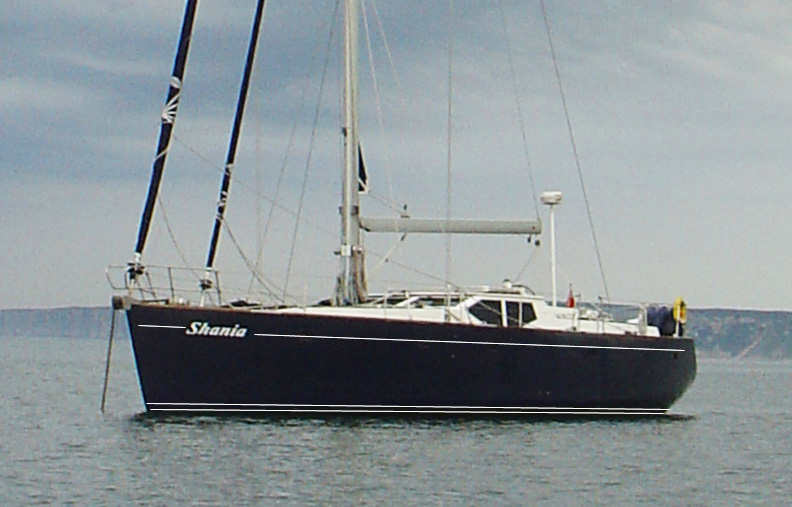
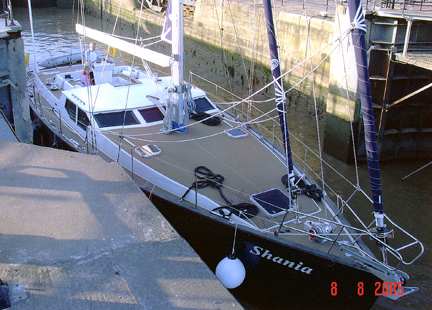
Photos show a recently launched
NY 55  built by Ian and June Thorpe

New York 55 - Version B

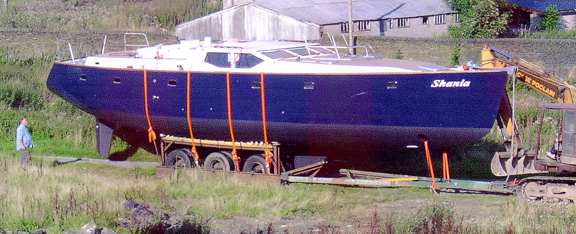
Photos show a recently launched
NY 55  built by Ian and June Thorpe

ny55b-02[1].gif (8337 bytes)

New York 55 - Version B

The accomodation plan shown for version B can be varied to suit the owners personal choice.

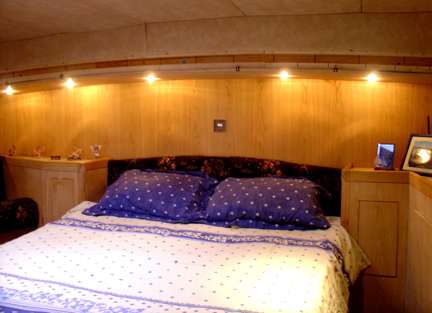
New York 55 - Version B

Here we see the large berth as featured in the master cabin ....Photos show a recently launched NY 55  built by Ian and June Thorpe

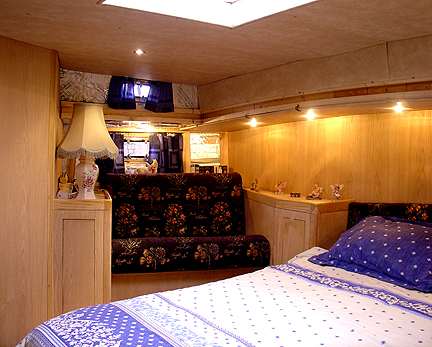
New York 55 - Version B

Another view of the spacious master cabin in the NY 55 B ... Photos show a recently launched  NY 55  built by Ian and June Thorpe

NEW CUSTOM FEATURE:

SAFETY SKEG IS AVAILABLE ON THIS BOAT.
The Roberts safety skeg is designed to take the best features from the LONG FIN / SKEG combination and add a SAFETY FACTOR.  Many of you may be aware that skegs in general are vulnerable to damage so here is our answer to this problem. EMAIL Bruce to more details of this development.

R434CC.jpg (21027 bytes)

 
SEE STUDY PLANS ON CD FOR MANY STEEL AND FIBERGLASS CONSTRUCTION PHOTOS.

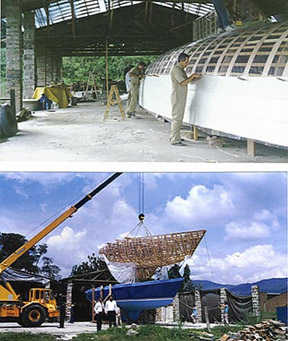
On the left we see the C-Flex Fiberglass being installed on a hull mold as described above. Similar methods are used to install core material such as Corecell or Airex foam.


On the left we see hull rolled over to the upright position and then the mold is lifted out of the hull shell. The mold is sometimes removed in one piece as shown here or in parts depending on the shape of the hull and the method used to laminate the hull.